
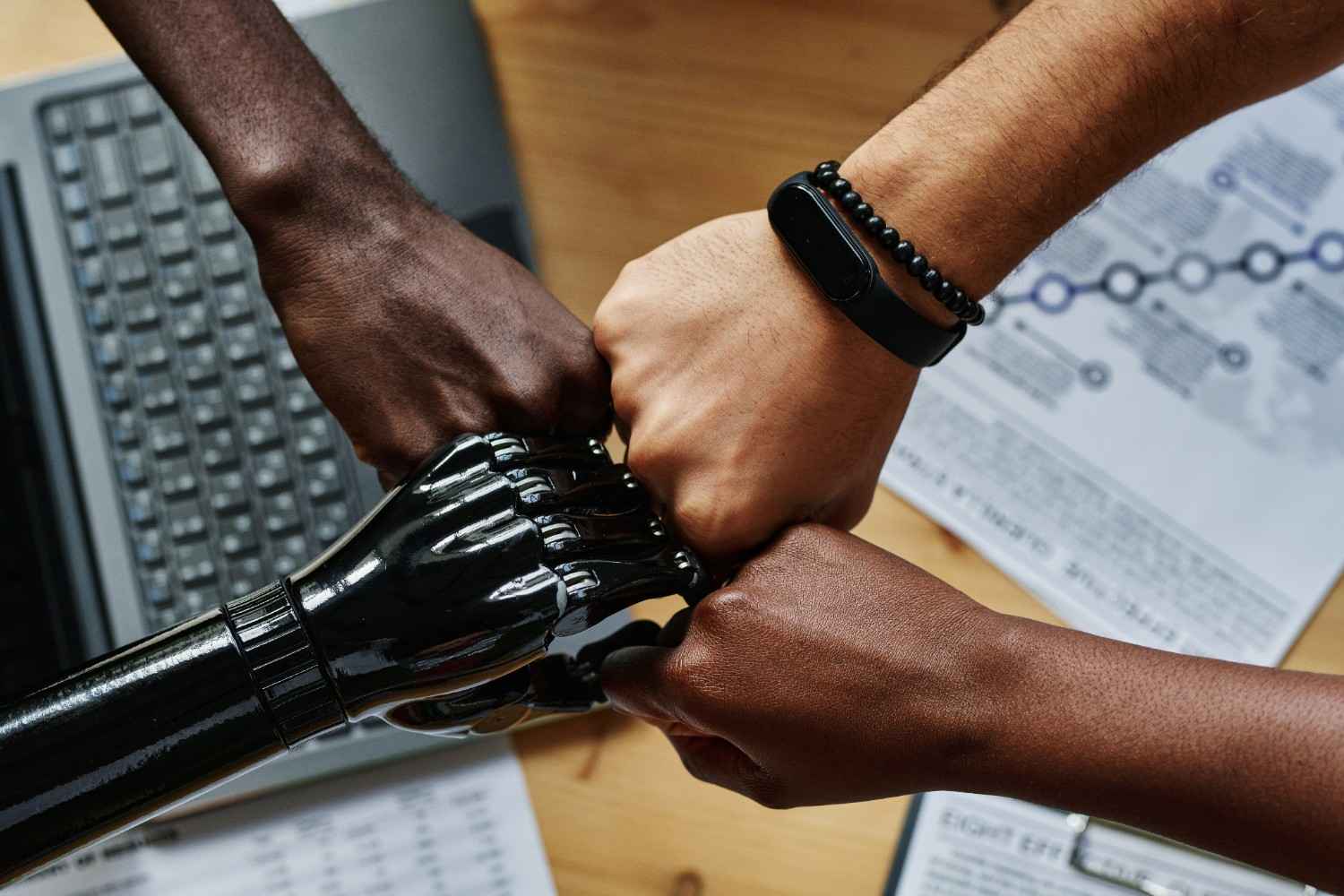
Workplace conflict remains a critical challenge for organizations managing hybrid teams, rapid growth, and diverse workforces across India. Structured workplace behaviour training techniques combined with AI-driven insights accelerate employee behaviour development by improving emotional control, communication clarity, accountability, and workplace decision-making. Behavioral training helps employees respond constructively during pressure situations, while AI identifies behaviour patterns influencing collaboration and performance. Together, behavioural skills and AI reduce conflict, improve productivity, build leadership trust, and support a positive work culture that delivers sustainable business outcomes.
What is Workplace Behaviour Training and Why Businesses Need It
Workplace behaviour training is a structured intervention that improves thinking patterns, emotional responses, communication habits, and workplace decision-making behaviour. Skill training focuses on what employees do, while behaviour training develops how individuals think and respond under pressure. Effective workplace behaviour training programs deliver measurable outcomes such as reduced attrition, higher engagement scores, better collaboration, improved customer experience, and leadership pipeline readiness. Organizations using behavioural skills training for employees create consistent behaviour standards that strengthen performance, accountability, and long-term culture.
Core Objectives of Behavioural Training Programs
Behavioural training aligns daily actions with organizational goals and performance expectations. Behaviour shapes results more strongly than process documentation because decisions, reactions, and interactions occur in real time. Structured programs focus on employee behaviour improvement through thinking patterns, emotional responses, and accountability, while workplace behaviour improvement training strengthens collaboration, leadership effectiveness, and consistent execution across teams.
Improve Communication Clarity
Easy and clear communication involves less misunderstanding, rework, and emotional escalation. Behaviour training reinforces listening, framing of messages, and discipline of the response. They learn to raise an issue in a respectful way, ask clarifying questions, and control tone in a tense situation, enhancing the coordination between the departments, and lessening tension due to assumptions or absence of full information.
Build Accountability Culture
Accountability increases when workers realize that there is more than a job description. Training the behaviour strengthens the responsibility, ethical decision-making, and action follow-through. The teams stop the tendency of being accusatory and concentrate on action orientation. Leaders demonstrate accountability through their behaviour on a regular basis, fostering trust and ownership across all levels of the organization.
Strengthen Emotional Intelligence
Emotional intelligence helps to improve self-management, sympathy, and awareness of the situation. The behaviour learning assists the employees to identify emotional stimuli, stress responses, and also react coolly when giving feedback, during conflict, or even when dealing with customers. Greater emotional intelligence helps to work in a team, and it eliminates the possibility of an insignificant dispute turning into a severe conflict at the workplace.
Reduce Workplace Conflict
Conflict is unproductive when unaddressed or poorly addressed at the workplace. Behaviour training provides the workforce with listening skills, negotiation, and emotional control skills. The teams are trained to solve conflicts at the initial stages, embrace divergent points of view, and solve problems in a constructive manner, so that resentment and lack of engagement do not become established.
Increase Ownership & Initiative
A behaviour that is driven by ownership promotes problem-solving and bold decision-making. Behaviour training is also strong in empowering initiative as it balances individual accountability and corporate objectives. Employees will be more eager to act rationally, help each other, and give ideas without being ordered around.
Top Workplace Behaviour Training Techniques to Build Positive Work Culture
Building a positive work culture requires consistent behaviour standards supported by structured learning methods. Effective workplace behaviour training techniques focus on experience, reflection, and reinforcement rather than theory. These techniques strengthen communication, accountability, emotional control, and leadership behaviour. When applied systematically, they create cultural alignment, reduce friction, and improve collaboration across teams, roles, and management levels.
Emotional Intelligence Development Workshops
Emotional intelligence development workshops focus on emotional intelligence training at workplace to improve self-awareness, empathy, and social awareness. Participants learn to regulate impulses and manage emotional responses during stressful situations. Real-life scenarios, such as handling angry customers or team conflicts, help employees practice constructive reactions. These workshops strengthen communication, collaboration, and professional relationships across the organization.
Role-Play Based Behaviour Simulation Training
Role-play-based behaviour simulation uses behavioural role play training to recreate real workplace conversations such as performance reviews, interactions with difficult colleagues, escalation handling, and customer complaints. Experiential practice builds confidence and behavioural muscle memory. Employees learn through action, which accelerates behaviour change more effectively than lecture-driven learning approaches.
Feedback & Coaching-Based Behaviour Correction
Feedback and coaching-based behaviour correction relies on behavioural coaching at the workplace through structured feedback, coaching conversations, and behavioural nudges. Managers shift from supervision to guidance, helping employees reflect on actions and improve responses. This approach builds trust, clarity, and accountability while reinforcing desired behaviour consistently across teams.
Conflict Resolution and Collaboration Labs
Conflict resolution and collaboration labs deliver workplace conflict resolution training using structured activities that develop negotiation, listening, and emotional control. Participants learn that conflict avoidance reduces productivity more than constructive discussion. Teams practice addressing disagreements early, balancing perspectives, and reaching solutions that preserve relationships and performance.
Leadership Behaviour Conditioning Programs
Leadership behaviour conditioning programs provide leadership behavioural training focused on influencing behaviour, decision-making, accountability, and trust-building. Managers learn how consistent behaviour shapes team morale and execution. Strong leadership behaviour creates clarity, confidence, and alignment, enabling teams to perform effectively during change and growth phases.
Habit-Building Behaviour Reinforcement Systems
Habit-building behaviour reinforcement systems apply behaviour reinforcement training through micro-learning nudges, behavioural reminders, peer accountability loops, and habit stacking. Continuous reinforcement ensures behavioural change sustains beyond workshops. Repetition and peer support embed positive behaviour into daily routines, strengthening long-term cultural stability.
Industry-Specific Behavioural Training Applications
Different industries require tailored behaviour skills to drive team performance, collaboration, and customer satisfaction. IT, sales, customer support, and leadership roles demand unique competencies for effective workplace outcomes. Organizations invest in corporate behavioural training India and behavioural training industry wise programs to meet these needs, with localized services across Bangalore, Mumbai, and Kochi.
IT & Tech Teams – Collaboration & Communication
· Improves interdepartmental cooperation and coordination.
· Develops good communication in remote and hybrid environments.
· Develops project coordination and problem-solving.
· Promotes the culture of feedback and sharing of knowledge.
· Enhances efficiency and productivity among technical groups.
Sales Teams – Persuasion and Listening
· Enhances active listening in order to know the needs of clients.
· Master ethical persuasion and negotiation.
· Develops long-term customer relationship strategies.
· Trains conflict management in sales dealings.
· Enhances coordination of the team to achieve the sales targets.
Customer Support – Empathy and Emotional Control
· Builds empathy and patience with clients.
· Develops emotional regulation under pressure.
· Strengthens problem-solving for service issues.
· Encourages consistent, professional communication.
· Improves customer satisfaction and retention outcomes.
Leadership – Influence and Decision Accountability
- Increases capacity for making ethical decisions while maintaining accountability standards.
- Provides students with methods to create convincing arguments and drive their audience toward their goals.
- Enables participants to create trustworthy relationships with their team members.
- Develops leaders who can guide their teams to succeed in diverse environments.
- Helps organizations achieve better strategic alignment, which results in improved team performance.
How Organizations Implement Successful Behaviour Training Programs
Successful organisations follow structured frameworks when implementing behavioural training programs to ensure learning translates into real behaviour change. A step-by-step approach identifies gaps, customizes learning experiences, reinforces learning through managers, and measures outcomes. Without ongoing reinforcement, even well-designed training fails to create sustainable performance improvements.
Behaviour Assessment and Gap Analysis
• Assess how present employee conduct compares to established organizational standards.
• The team needs to find out which parts of their communication system, which areas of their responsibilities, and which areas of their teamwork process they need to work on.
• Will use three methods to gather information, which include surveys, direct observations, and collected feedback.
• Needs to identify the most important behaviour gaps that lead to performance problems.
• Will create initial performance standards, which will help them track advancement after the educational program.
Customized Learning Design
• Design learning modules that match the objectives of the organization.
• Requires inclusion of realistic application through role-specific scenarios.
• Requires integration of both behaviour exercises and micro-learning components.
• Needs content adaptation for the requirements of each industry, team, and cultural setting.
• Needs development of learning paths that keep employees engaged while providing them with practical skills.
Experiential Workshops
· Conduct hands-on workshops with real-life simulations.
· Encourage practice of new behaviours in safe environments.
· Foster peer learning through group exercises and discussions.
· Include reflective exercises to reinforce learning outcomes.
· Emphasize application of skills to day-to-day work.
Manager Reinforcement System
· Train managers to coach and support employee behaviour.
· Set clear expectations for post-training follow-ups.
· Encourage feedback loops between managers and employees.
· Recognize and reward demonstration of desired behaviours.
· Ensure reinforcement becomes part of performance management.
Behaviour Measurement Metrics
· Track behavioural changes through performance evaluations.
· Measure improvements in collaboration, accountability, and communication.
· Analyze attrition rates, engagement scores, and productivity metrics.
· Adjust training programs based on observed results.
· Provide actionable insights for continuous behaviour improvement.
How ENABLE IST Designs Behavioural Transformation Programs
Enable IST is a Training, Hiring & Consulting company delivering structured transformation beyond traditional classroom sessions. Their approach includes behaviour diagnostics assessment, customised behavioural competency mapping, industry-specific workshops, leadership coaching, post-training reinforcement systems, and measurable performance outcomes. With a strong presence in Behavioural Training in Bangalore, Behavioural Training services in Mumbai, and Behavioural Training consulting firms in Kochi, they lead in Enable IST behavioural training and are a trusted corporate behavioural training company in India.
Measuring ROI of Workplace Behaviour Training
Organizations can quantify the impact of training through measurable outcomes such as reduced attrition, faster conflict resolution, improved performance reviews, increased customer satisfaction scores, and enhanced leadership readiness. Calculating behavioural training ROI involves comparing pre- and post-training metrics using formulas like ROI (%) = (Net Benefits ÷ Training Costs) × 100. By tracking these indicators, businesses ensure that behaviour interventions deliver tangible performance improvements and support long-term organizational growth.
The Future of Workplace Behaviour Training in the AI-Driven Workplace
The future of behavioural learning combines human insight with AI capabilities. While AI identifies patterns through advanced analytics, humans drive real behaviour change through guidance and reflection. AI enables AI in behavioural training by providing personalised learning journeys, real-time coaching nudges, and data-driven insights. Organisations adopting this approach can accelerate skill development, improve decision-making, and create adaptive workplace cultures, making the future of behavioural training more targeted, measurable, and impactful than ever before.
Conclusion
Organizations no longer fail because of strategy; they fail due to behaviour misalignment. Implementing structured workplace behaviour training techniques and behavioural training builds a sustainable culture, improves engagement, strengthens team collaboration, and drives measurable long-term performance. Companies that invest in continuous behaviour transformation rather than one-time workshops experience higher productivity, better leadership readiness, and lasting business results, ensuring employees align with organisational goals and values consistently.
Get in Touch Today with Enable IST to transform teams, boost collaboration, and achieve extraordinary, measurable, lasting workplace success like never before.
Read More - The Future of Behavioural Training: Trends Every Employer Should Know
Behavioural Training




0 Comments
Leave a Comment